How to Convert Any Oven Recipe to Air Fryer
A complete guide to converting oven temperature and cooking time for any recipe to air fryer settings. Includes a Celsius and Fahrenheit conversion chart.
2026-04-22
You just found a recipe that looks incredible — but it's written for a conventional oven, and all you want to do is throw it in the air fryer. Good news: the conversion is simpler than you think, and once you understand the logic behind it, you'll never need to guess again.
The air fryer is essentially a compact countertop convection oven. Because it's smaller, hot air circulates much more directly around your food, cooking it faster and more evenly. That efficiency is exactly why you need to adjust both temperature and time when you make the switch.
The Basic Conversion Formula
The adjustment you make depends on the type of oven your recipe was written for.
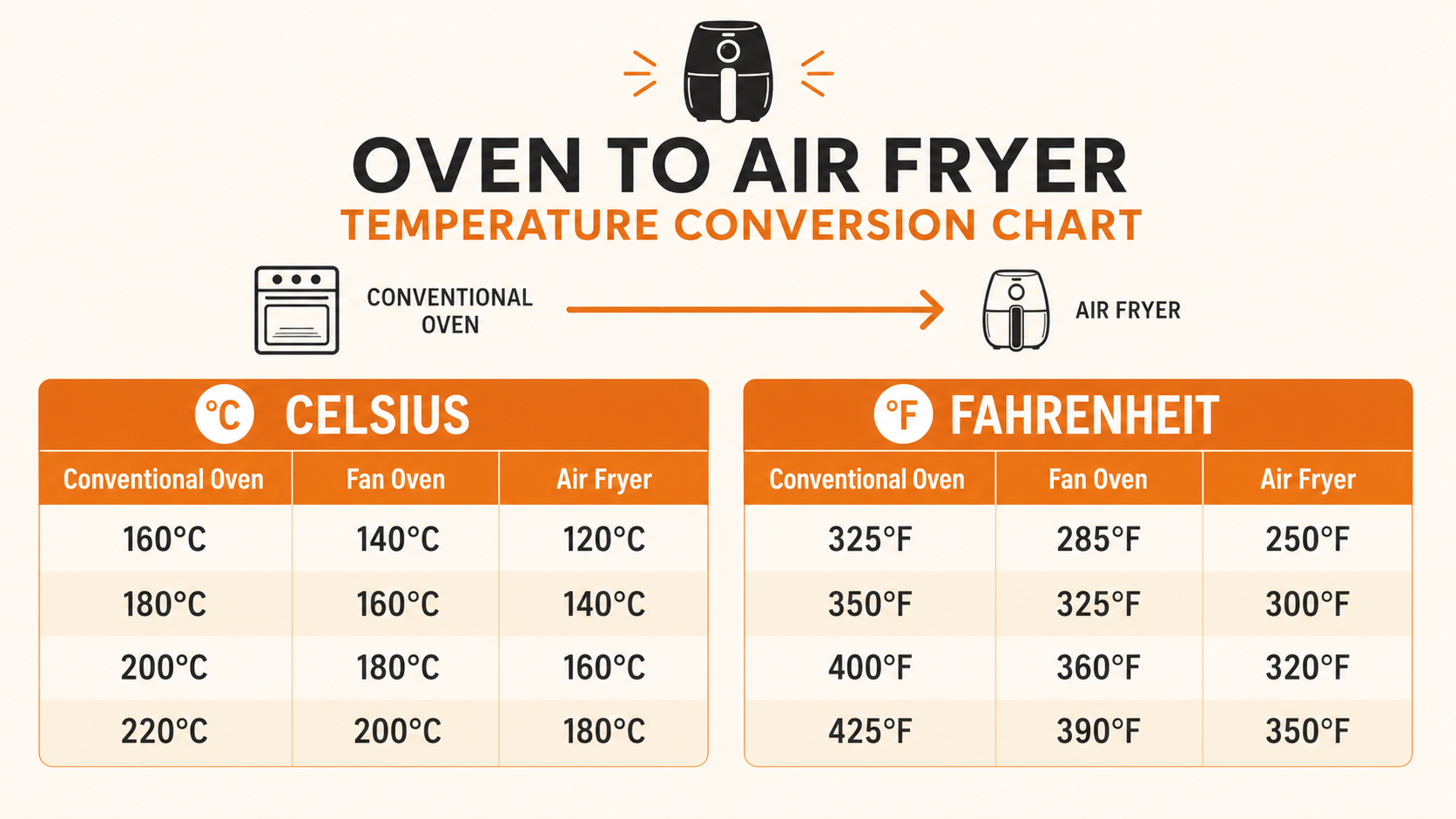
- Reduce temperature by 25°F (14°C) if your recipe uses a fan or convection oven.
- Reduce temperature by 50°F (28°C) if your recipe uses a conventional oven (no fan).
- Reduce cooking time by 20% regardless of oven type.
These two rules cover the vast majority of everyday recipes. If you'd rather skip the mental math, use our Air Fryer Conversion Calculator — just enter your temperature and time and it handles the rest.
Conversion Charts
Here's a quick reference for the most common oven temperatures in both Celsius and Fahrenheit:
Food-Specific Tips
The general formula works well, but certain foods have quirks worth knowing before you start the timer.
Chicken cooks well at 375°F (190°C) for bone-in pieces, or 400°F (200°C) for boneless cuts. Always use a meat thermometer — internal temperature must reach 165°F (74°C) to be safe, and the air fryer can brown the outside faster than the inside cooks through.
Frozen food is a special case. Since manufacturers already formulate frozen items for dry, high-heat cooking, apply a smaller reduction — about 25°F (14°C) rather than the full 50°F. Going too low can leave the center cold while the outside browns.
Baked goods like cakes and muffins need more caution. Reduce time by only 10–15% instead of 20% to give the center time to set before the edges firm up. Check with a toothpick rather than relying on color alone.
Fish cooks surprisingly fast in an air fryer. Set the temperature to 380°F (195°C) and plan on 8–12 minutes depending on thickness. The high-circulation environment is ideal for flaky results, but overcooking happens quickly — start checking early.
Common Mistakes to Avoid
Even with the right temperatures, a few habits can undermine your results.
Overcrowding the basket is the most common error. The air fryer works by moving hot air around your food, and a packed basket blocks that airflow entirely. When in doubt, cook in batches — the extra few minutes are worth it for even browning.
Skipping the preheat costs you consistency. Most air fryers benefit from a 3-minute preheat, especially when cooking meat. Starting cold means the first few minutes of your timer are spent warming up instead of cooking.
Forgetting to flip leaves you with one well-done side and one pale side. Shake the basket or flip your food at the halfway point — it takes five seconds and makes a visible difference.
Tools to Help You Convert
You don't have to calculate every recipe by hand. This site has a few tools built exactly for this:
- Oven to Air Fryer Converter — enter your exact oven temperature and cooking time to get instant air fryer settings.
- Cooking Time by Weight Calculator — useful when you're working from a weight-based recipe rather than a temperature chart.
- Brand Converter — if your Ninja, Philips, or Cosori runs noticeably hotter or cooler than average, this adjusts for your specific model.
Once you've made the conversion a few times, the logic becomes second nature. Lower the heat, trim the time, and check early — that's the whole method.